

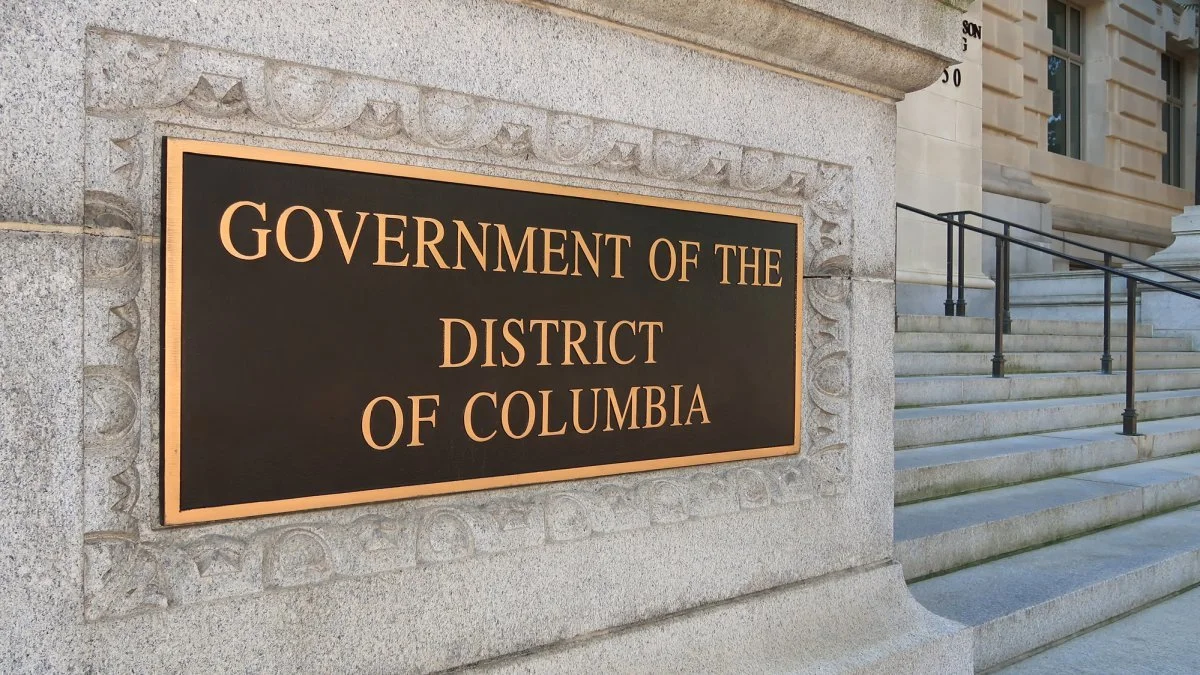
Advisory Neighborhood Commissions & DC Government
About the ANCs
The District is divided into 46 Advisory Neighborhood Commissions (ANCs), which are the most local level of government in the District. Each ANC is made up of Commissioners elected from Single-Member Districts (SMDs), sub-neighborhood areas of roughly 2,000 residents each. Commissioners are unpaid, elected officials who serve two-year terms. Think of it this way: Since the District often describes itself as a city, county, and state, the ANCs functionally serve as state representatives (vs. the DC Council’s role as state senators), except that ANCs have no lawmaking or appropriations power, which is exclusively reserved to the Council under the DC Home Rule Act. Still, ANCs are organized under the legislative branch of DC government and are subordinate to the Council — the “lower house” of the legislature, if you will.
ANCs exist - and were established by Congress and statutorily constructed by the Council - because they know neighborhood streets, businesses, and quality-of-life issues better than anyone else - dare I say, even more so than some councilmembers. By law, the executive branch of DC government must give "great weight" to ANC recommendations — meaning that when an ANC takes a formal position on specific matters, agency decision-makers are required to thoroughly consider any views and recommendations and explain their reasoning if they depart from them (ANCs do not functionally have “great weight” before the DC Council; and can’t sue, so carry none before the DC Courts). In practice, this makes ANCs the most direct way residents can shape decisions about liquor licenses, planning, zoning and development, public space use, street safety, and city services in our neighborhoods.
Where ANC Authority Comes From
Congress created ANCs through the District of Columbia Home Rule Act of 1973, which directed the Council to divide the city into neighborhood commission areas and authorized the election of an ANC wherever residents petitioned for one — a referendum of DC voters in 1974 officially ratified Congress’ intent. The DC Council then enacted the Advisory Neighborhood Commissions Act of 1975, effective October 10, 1975 (D.C. Law 1-21; § 1-309.01 et seq.), which details how Commissions are organized, their powers and authority, and their role in District government. Together, these two laws form the legal foundation for every ANC in the District, including ANC 1A, which Anthony currently serves on and is running for re-election.
The "Great Weight" Standard
The single most important power Congress gave ANCs is the right to advise the District government — the Mayor, the Council, executive agencies, and independent agencies, boards and commissions alike. The Council would build on this broad advisory authority and mandate that the ANCs’ official positions be given "great weight" by the District government. The D.C. Court of Appeals expounded on and explicitly clarified this standard in Kopff v. Alcoholic Beverage Control Bd., 381 A.2d 1372, 1381 (D.C. 1977).
In practice, this means:
Advance notice. District agencies must notify the ANC before taking action on a wide range of matters affecting the neighborhood — zoning changes, public improvements, changes to city service delivery, grants to community organizations, and proposed changes in the use of District-owned property, among others.
Acknowledgment of formal position. When an ANC formally considers and votes on an issue within the required notice period, the affected District government entity must specifically acknowledge the Commission's role as the neighborhood's voice and treat its issues and concerns as presumptively correct in its deliberations.
A written response. An agency isn't required to follow an ANC's recommendation — but if it disagrees, it must explain in writing, with specificity, exactly why it departed from the Commission's position on each issue raised.
This is what separates ANCs from an ordinary public comment process because the District government can't just take its views and recommendations and move on. It has to engage with what the Commission said and account for its decision on the record. This is how residents’ views are most effectively represented to DC government.
Where ANCs Have the Most Influence
While ANC recommendations are advisory across nearly every area of District policy, there are a handful of administrative proceedings where an ANC's position carries outsized, near-decisive influence (think of these as the “plenary powers” of the ANCs):
Alcoholic beverage and cannabis licensing. ANCs are treated as a party with standing before the Alcoholic Beverage and Cannabis Board (and the Alcoholic Beverage and Cannabis Administration), and their protests or agreements shape the outcome of license and endorsement applications and renewals in ways few other District stakeholders can match.
Zoning and land use. ANCs regularly appear before the Zoning Commission and Board of Zoning Adjustment, and their positions are central to the record in variance, special exception, and map amendment cases.
Planning and budget. ANCs must be notified and allowed to weigh in before major planning actions, including elements of the Comprehensive Plan, and can formally comment on the District budget as it affects their neighborhood.
Organization, Procedures, and Limitations on Powers
Each ANC operates under its own bylaws and standing rules of organization and procedure that are not inconsistent with District and federal law, and files those bylaws with the Council and the Office of Advisory Neighborhood Commissions (OANC). Where the bylaws don't otherwise provide, commissions must follow Robert's Rules of Order, Newly Revised. ANCs can also initiate their own proposals for District government action, monitor and file complaints about the delivery of city services in their area, and receive modest funding through the OANC to support their operations. By law, ANCs cannot sue in DC or federal courts in their institutional capacity (but can in their personal capacity), and they may accept outside contributions only within limits set by the Council (under $1,000) or with the Council's approval. ANCs, as government bodies, also can’t incorporate. ANC Commissioners cannot be held personally liable for actions taken in their capacity as elected single-member district representatives.
General Powers and Authority of the ANCs
as provided for in the DC Home Rule Act and the ANC Act of 1975
-
“Each Advisory Neighborhood Commission (“Commission”) may advise the Council of the District of Columbia, the Mayor and each executive agency, and all independent agencies, boards and commissions of the government of the District of Columbia with respect to all proposed matters of District government policy including, but not limited to, decisions regarding planning, streets, recreation, social services programs, education, health, safety, budget, and sanitation which affect that Commission area.”
Separately, each Commission may present its views to any federal or District agency — a power that extends ANC’s reach beyond the District government to federal entities operating in the neighborhood
-
The executive branch and any independent agency, board, or commission must give 30 days' or 45-days’ written notice — excluding weekends and legal holidays — of specific government actions. Shorter notice is permitted only on good cause published with the notice, or in an emergency.
30-day required notice for the following:
Intent to acquire an interest in real property, either through purchase or lease; or
Intent to change the use of property owned or leased by or on behalf of the government;
The award of any grant funds to a citizen organization or group;'
The transmission to the Council of a proposed revenue bond issuance, comprehensive plan, amendment to a comprehensive plan, or element of a comprehensive plan; or
The formulation of any final policy decision or guideline with respect to:
Grant applications,
Requested or proposed zoning changes, variances
Public improvements,
Licenses, or permits affecting the Commission area,
The District budget and city goals and priorities,
Proposed changes in District government service delivery, and
The opening of any proposed facility systems
Before granting or renewing a license for a theater, cinema, skating rink, dance hall, exhibition, lecture, or other entertainment, the Department of Licensing and Consumer Protection (DLCP)
45-day required notice for the following:
Applications for issuance or renewal of retailer’s licenses, and consumption licenses for clubs, or for transfer of a license of any of these classes to a different location
General Notice
A current list, updated at least twice a month, of applications for construction, demolition, raze, and public space permits from the Department of Buildings
Notice of applications, public hearings, proposed actions, and actions on all zoning cases from the Office of Zoning, including the Board of Zoning Adjustment and the Zoning Commission
-
A Commission that receives notice must consider the proposed action at a duly noticed public meeting, and its recommendations must be in writing and must articulate the basis for its decision. Oral testimony is treated as if it had been provided in advance in writing when it is accompanied within seven days by written documentation approved by the Commission supporting that testimony.
The issues and concerns raised in a Commission's recommendations must be given great weight during the government entity's deliberations. Great weight requires acknowledgment of the Commission as the source of the recommendations and explicit reference to each of the Commission's issues and concerns.
In all cases, the government entity must articulate its decision in writing. That written rationale must articulate with particularity and precision the reasons why the Commission does or does not offer persuasive advice under the circumstances. The entity must make specific findings and conclusions regarding each issue and concern raised by the Commission and support its position on the record. A copy of the written decision must be sent promptly to the Commission and to the respective Ward Councilmember.
-
Initiate government action. Each Commission may initiate its own proposal for action by the District government. The entity receiving the proposal must acknowledge it in writing within 10 days of receipt and must issue a status report to the initiating Commission within 60 days of receipt.
Hold public hearings. Any Commission may hold public hearings on requested or proposed government actions, and may invite public witnesses from any executive or independent entity to testify before the Commission. Within 45 days of the close of a public hearing, the Commission may submit to the Council a report detailing its findings and recommendations, to be included in any public record of the proposed government action.
File reports with the Mayor and Council. By November 30 each year, a Commission may file an annual report for the preceding fiscal year with the Council and the Mayor, including summaries of important problems in priority order, recommendations for District government action, recommendations for improving Commission operations, a financial report, and a summary of Commission activities. Minority reports may be filed.
Publish an annual report. By December 1 each year, each Commission must publish an annual report or newsletter summarizing its activities in service to the community over the preceding 12 months, highlighting key issues voted upon, comments submitted to District agencies, and community grants issued.
Involve neighborhood groups in its work. Each Commission may involve representatives of other neighborhood groups in the work of its standing or special committees.
Serving as a federal citizen advisory mechanism. Each Commission may, where appropriate, constitute the citizen advisory mechanism required by any federal statute, unless the federal statute specifically prohibits it.
-
A Commission may adopt recommendations on legislation pending before the Council, and must forward a copy of those comments to the Office of ANCs and to the Secretary to the Council within 14 days after adoption.
-
Commissions may meet jointly, formally or informally, to address common issues. A Commissioner may represent the Commission in a formal joint meeting only after the Commission has authorized that participation, and for any official action taken in a formal joint meeting, the Commission must specify the scope of the Commissioner's participation by resolution.
-
Each Commission is entilted to have access to District government officials and to all District government official documents and public data under the DC Freedom Of Information Act that are material to the exercise of its authority to develop recommendations to the District government.
ANCs matter, and so does your vote for them.
Because ANCs carry "great weight" with DC government, the person who holds your SMD seat isn't a symbolic representative — they're the one voice the law requires the District to listen to on the issues that touch your block directly: which liquor licenses get approved next door, whether a new development gets built as proposed, how a street gets redesigned, and whether the city actually responds when something isn't working. In other words, a Commissioner does a lot of day-to-day work and has to weigh in on many issues affecting their district and neighborhood commission area.
With roughly 2,000 residents per district, an ANC race can be decided by a small margin — often just a few hundred votes. That means your vote carries far more weight here than in almost any other election on your ballot. It also means that the difference between a Commissioner who shows up prepared, knows the process, and follows through and one who doesn't is decided by people like you.
The role takes real skill: thoroughly reading and considering zoning applications and licensing filings; participating in effective public meetings and understanding parliamentary procedure; building consensus with fellow Commissioners; and knowing when and how to push agencies (and even the Council) to respond and act. Getting it right requires someone who treats the job as more than a title or side gig, even though it’s an unpaid role — someone who does the homework, shows up consistently, and turns "great weight" into real results and action for you and the neighborhood.
That's the case for this seat and for every seat on ANC 1A. Your vote decides who does that work for the next two years. Anthony has been serving, fighting, and delivering for you and your neighbors for the last four years, and is prepared to continue that work, fighting for a stronger, brighter future for Columbia Heights.