

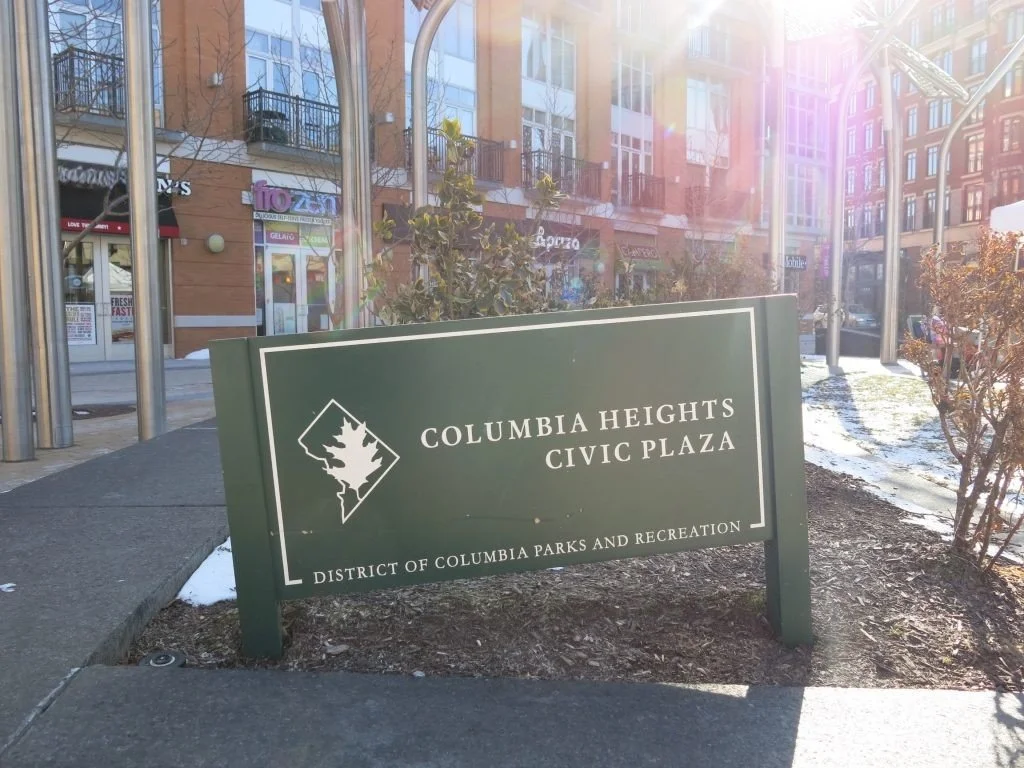
Transforming Civic Plaza
The Civic Plaza should be one of the great public spaces in Columbia Heights. Civic Plaza sits at the literal and symbolic center of our neighborhood — where 14th Street, the Metro, our small businesses, our vendors, and our residents all converge. It should be the front porch of our great neighborhood: clean, safe, active, and welcoming to every resident, every family, and every visitor.
Since taking office in 2023, Anthony has worked tirelessly to change how the District thinks about this space — from a place where agencies pass responsibility around to one where government is accountable. Anthony knows that Columbia Heights has a public realm of possibilities, and he’s fought to bring it to life in new ways.
Civic Plaza should be a place where families gather, neighbors meet, small businesses thrive, young people spend time safely, and our community’s culture and diversity are visible every day. Instead, for too long, the Civic Plaza has been a symbol of something else: what happens when a public space is not given the investment, maintenance, or coordinated stewardship it deserves. Anthony has made transforming the Civic Plaza one of his top priorities because Columbia Heights deserves a greener, cleaner, safer public realm.
Anthony’s goal is simple: Transform the Civic Plaza from a space people pass through into a destination where people want to go, stay, gather, and connect. And Anthony has built a roadmap for getting there. Civic Plaza is unmistakably ours as a community, and Anthony knows that he owes it to Columbia Heights to finally get this space right.
That is why Anthony, as chairman of the Special Committee on Public Life, convened a public hearing on the management of the Columbia Heights Civic Plaza on September 5, 2024, at which he called on agencies to appear before his committee to address their respective roles in the stewardship and care of the Civic Plaza. The hearing examined the challenges and opportunities for Civic Plaza and how agencies and community partners can work together to help revitalize the space. You can read the hearing record and committee report, which include key recommendations for immediate improvements at Civic Plaza, which Anthony stewarded to unanimous passage by ANC 1A.
The Problem
For too long, the Civic Plaza has embodied a governance failure, not merely a design failure. No single District agency owns its success. Maintenance is fragmented across the Department of Parks and Recreation (DPR), the Department of General Services (DGS), the Department of Public Works, and the Department of Transportation (DDOT). General maintenance and groundskeeping have depended on the Herculean efforts of community partners, nearby property owners, and residents rather than sustained public investment from the District government, which actually owns the space.
The DC Office of Planning's Columbia Heights–Mt. Pleasant Public Life Study (Spanish version) confirmed what neighbors have long known. Columbia Heights is one of the densest, most-trafficked neighborhoods in the District — yet the public life study found that most people are simply passing through our public spaces rather than staying to enjoy them, including Civic Plaza. We have a public square with world-class potential — surrounded by transit, retail, culture, and 30,000+ daily passersby — that has never been managed like the civic asset it is. This is less than 1.5 acres of land, largely hardscaped, so it is not unreasonable to say that we can and must transform this space so its potential can truly be realized.
Anthony’s Record
-
As Commissioner, Anthony established and chairs ANC 1A's Permanent Special Committee on Public Life and Neighborhood Planning (SCPL) — the first standing body in our Commission dedicated to how residents and visitors experience the public realm, with the Civic Plaza at the center of its mandate, as well as our parks and community facilities.
-
Anthony brought residents, community stakeholders, and District government officials to the table — in person and virtually — to put the Plaza's challenges and opportunities on the public record at the first-ever public hearing of ANC 1A (and all ANCs according to the Office of Advisory Neighborhood Commissions). Following the hearing, the Commission unanimously adopted the official Hearing Record and committee report (ANC 1A Report 2024-0008), containing formal recommendations for action by the Office of Planning, the Department of Parks and Recreation, the Department of General Services, and the Department of Public Works.
-
Under Anthony’s leadership, the Permanent Special Committee on Public Life and Neighborhood Planning coordinated community engagement for the Office of Planning's data-driven study of our public spaces — helping drive participation in surveys, street interviews, and community "walkshops" — and now leads ongoing oversight of the study's implementation. The final report, the Columbia Heights and Mount Pleasant Vision Framework for Public Realm Design, now provides our neighborhood with a shared blueprint for Civic Plaza, the corridors around it, and much more.
-
Anthony introduced a resolution (R25-0042) to establish “The Heights of Possibility,” a Columbia Heights Neighborhood Improvement Program, under the coordination and direction of ANC 1A. Though the Commission chose not to approve the measure, Anthony has used it as a continual rallying call for much-needed Commission-led leadership on how best to improve the material conditions of parks and public spaces, such as Civic Plaza, in our neighborhood.
-
Through his committee, Anthony drafted and shepherded a comprehensive cleanup and beautification plan for Columbia Heights to passage, grounded in agency accountability and in how best to create a public record of service-delivery failures associated with conditions across our public realm. The plan creates a designated zone for the Columbia Heights Civic Plaza, so volunteers, agency partners, and other stakeholders can better focus the necessary attention and resources in this space.
For too long, the Civic Plaza has embodied simple governance failure. No single District agency owns its success (and therefore can too easily point to others for its continued decline). To be clear, this is a Department of Parks and Recreation asset—the agency administers the permits for who’s allowed to use the space, which are also rarely enforced. Maintenance is fragmented across the Department of General Services (fountain renovations and some general upkeep) and the Department of Public Works (trash/litter). The District Department of Transportation manages the public right-of-way and some of its upkeep, such as pavers and mosaic tiles. The Ward 1 Clean Team, funded by the Department of Small and Local Business Development, is also responsible for the overall cleanup of the space, particularly along the corridors that bound Civic Plaza. Programming has depended on the heroic efforts of community partners rather than sustained public investment.
The DC Office of Planning's Columbia Heights–Mt. Pleasant Public Life Study confirmed what neighbors have long known. Columbia Heights is one of the densest, most-trafficked neighborhoods in the District — yet the study found that most people are simply passing through our public spaces rather than staying to enjoy them. We have a public square with world-class potential — surrounded by transit, retail, culture, and 30,000+ daily passersby — that has never been managed like the civic asset it is. Anthony is fighting and will continue to fight to give his constituents and Columbia Heights the public square it deserves.
1. Making sure we fund the Framework. Anthony knows that this study cannot sit on a shelf, and that we can’t repeat the same mistakes of the 2004 Framework. Through his leadership as the 1A06 Commissioner and Chair of the Permanent Special Committee on Public Life and Neighborhood Planning, Anthony will continue to identify and advocate for capital funding in the District budget to implement the Vision Framework's recommendations for the Plaza and surrounding corridors—ideally within five years or sooner.
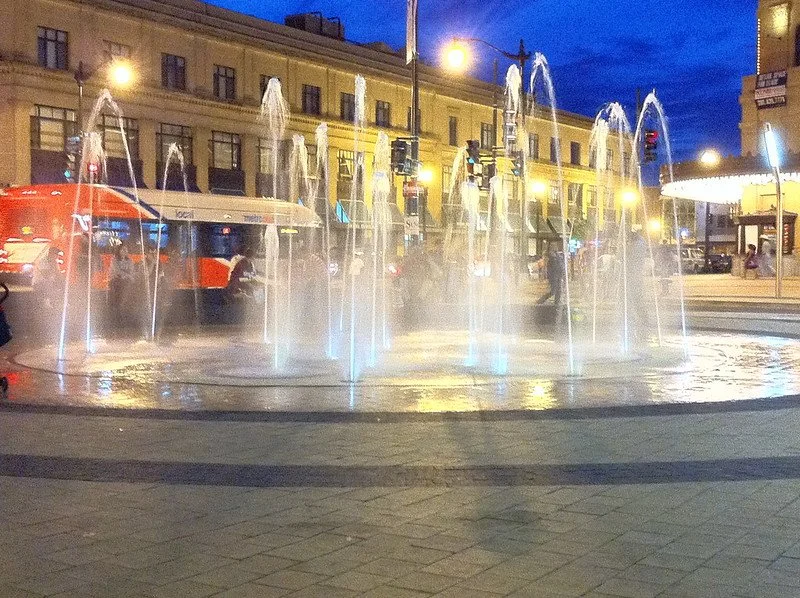
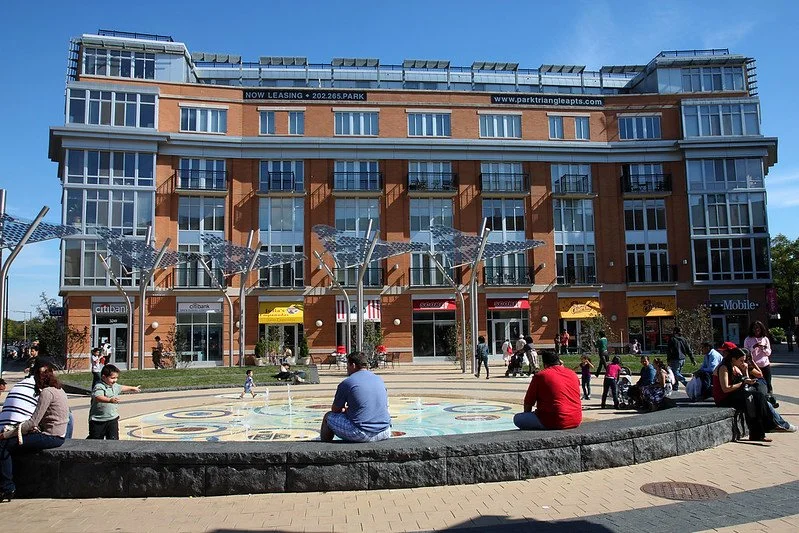
2. Rethink how we use Civic Plaza so it’s welcoming to all. Since Civic Plaza opened and was dedicated on September 28, 2009, it has gone through a unique evolution. In its first few years, it boasted huge crowds, with residents enjoying the fountain and terraced grassy areas. The farmers’ market began using the space for twice-weekly market days. And then, impromptu events started happening frequently, many often unpermitted. Over time, Civic Plaza has seen heavy use, and many users have contributed to the wear and tear on the space, with the fountain now in a terrible state and street furniture damaged by bird droppings from day-long pigeon feeding. Anthony has and will continue to fight to bring everyone to the table around a new, shared vision for Civic Plaza, including how and when it is used, whether legacy groups should be allowed to use the space in the same way, and whether and how the space can be activated and programmed in a way that makes it a welcoming space for all residents and visitors.
3. Establish clear ownership and management of the Plaza. Since taking office, Anthony has been engaging with every stakeholder who touches Civic Plaza—from the farmers’ market to the pop-up tablers to all District agencies. By identifying all relevant stakeholders and understanding their respective interests and needs for the space, Anthony has and will continue to press for a unified management model for the Civic Plaza — clear agency responsibility, defined maintenance standards, and public accountability — building on the recommendations outlined in the report his committee put forward in 2024 and from the published 2024 Framework.
4. Back our small businesses. A thriving Civic Plaza and a thriving 14th Street corridor rise together, with small businesses benefiting from the traffic the plaza attracts or offering extended outdoor seating to enjoy a beverage or meal. Anthony will continue to advocate for capital improvements and a sensible maintenance and groundskeeping framework so that Civic Plaza can help our small businesses in central Columbia Heights grow and thrive.
5. Program the Plaza year-round for all. Through partnerships with community organizations and interested residents, Anthony will continue working to ensure Civic Plaza is activated each season with programming that caters to every demographic in the neighborhood.
Our Solutions
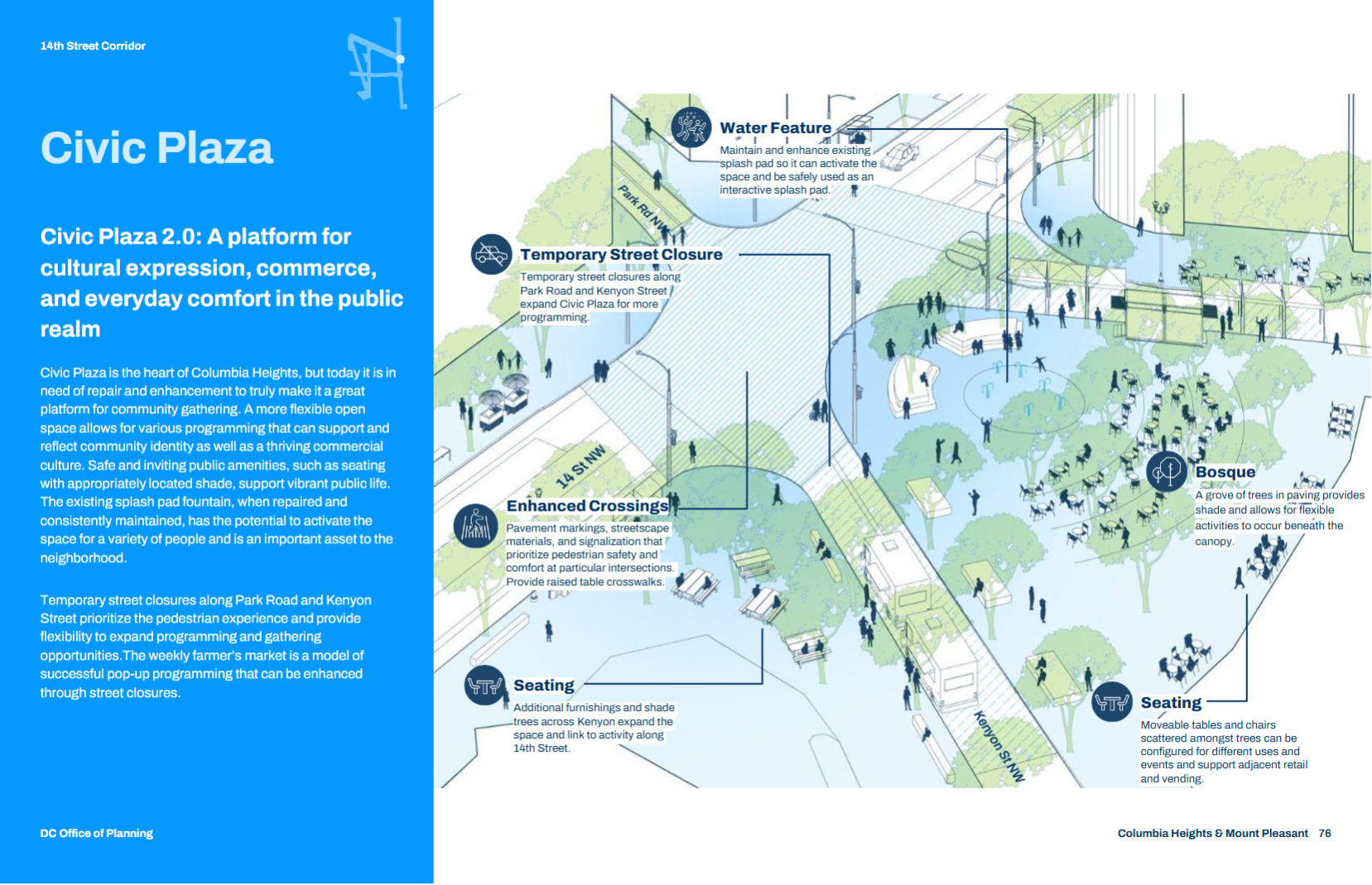
The Office of Planning's "Civic Plaza 2.0" shows what the Civic Plaza could become: a redesigned, more flexible public square built for cultural expression, commerce, and everyday comfort. The illustration pairs the existing footprint at 14th Street, Park Road, and Kenyon Street with a set of specific, achievable upgrades — an enhanced and reliably maintained fountain, a "bosque" grove of shade trees over flexible paved hardscape, moveable tables and chairs and additional seating that can flex for events and support nearby retail, enhanced pedestrian crossings with raised tables and better streetscape materials, and potential for temporary street closures along Park Road and Kenyon Street to expand room for programming like the weekly farmers’ market. In short, it's a community-shaped design vision to transform Civic Plaza into a greener, shadier, safer place to walk through, and one that's active year-round.
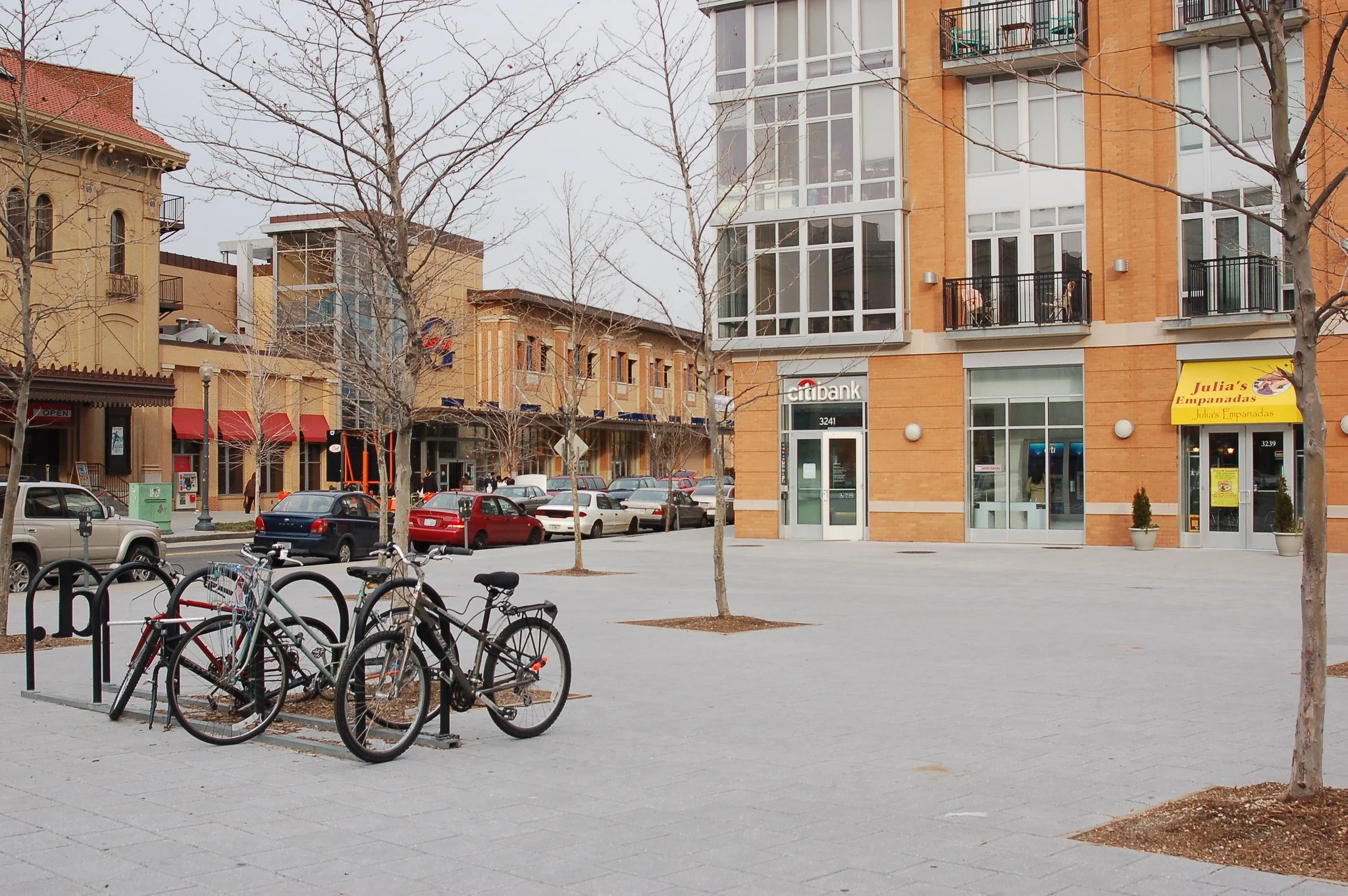
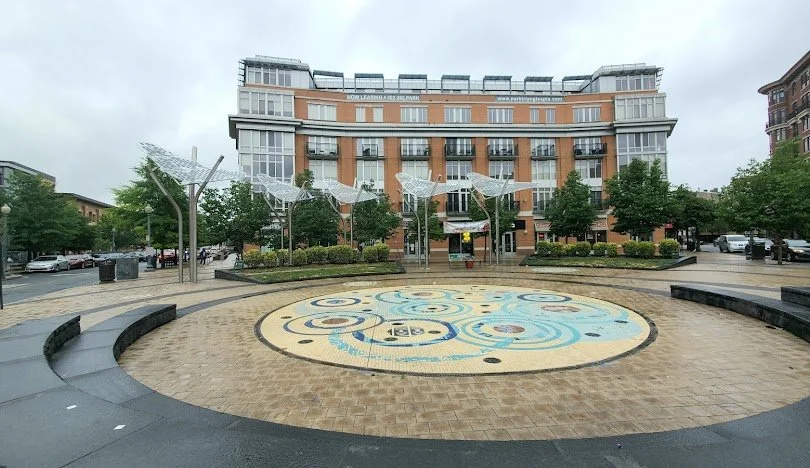
"The Columbia Heights Civic Plaza is more than just a shared space — it's a symbol of our neighborhood's resilience and diversity, a place where history and possibility converge. The future of the Civic Plaza isn't just about enhancing physical infrastructure; it's about creating a public space that reflects the best of us and invests in the potential of every resident."
-Commissioner Anthony Thomas-Davis