

Inclusive communities
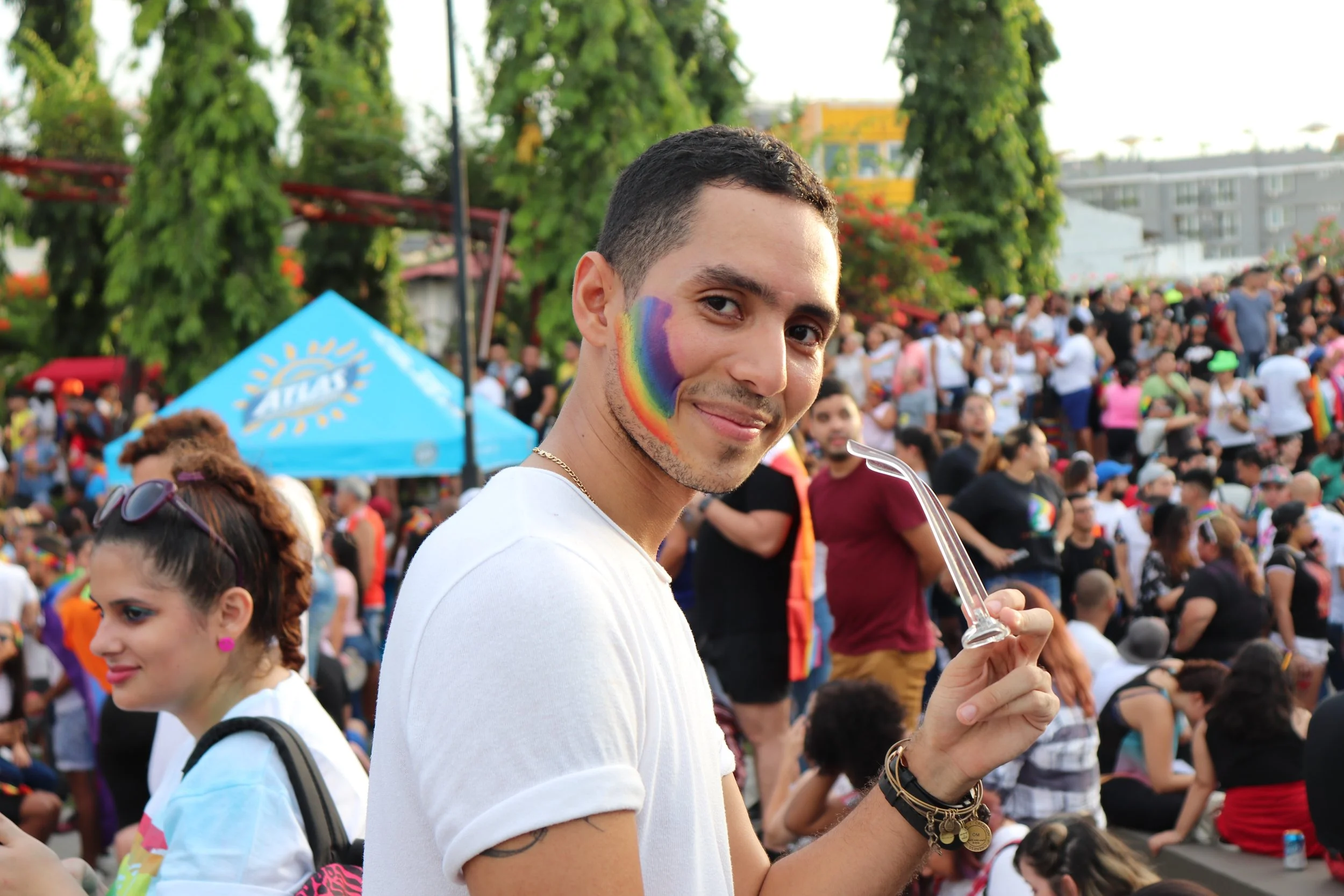
No neighbor deserves to live in fear or shame in their community. We must show up every day ready to create and sustain inclusive, vibrant communities that make everyone feel seen and heard.
Write an engaging introduction that provides an overview of this vision or policy promise. Highlight why it matters, what it aims to accomplish, and how it aligns with the needs and values of the community. Keep it concise and inspiring to draw readers in.
The Problem
Let’s first address our immigrant communities. Columbia Heights is what it is because of immigration. This neighborhood is home to one of the largest multiethnic and racial communities in the region — Salvadoran, Ethiopian, Dominican, Mexican, West African, and Caribbean families who built the businesses, churches, soccer leagues, and block life that make people want to move here. Ward 1 is roughly 19% Hispanic; in our census tracts, the share is considerably higher. Add to that the legacy of Columbia Heights being one of the first enclaves for African Americans who worked in the federal government in the early 1900s, and many Black residents still call the neighborhood home today. Columbia Heights is the melting pot of the District, and proudly so.
Since August 2025, our communities and neighborhood have been living under sustained federal pressure. When the President decided to take over the Metropolitan Police Department, placing nearly 3,400 officers under federal control and stationing roughly 2,400 federalized National Guard troops in the District, we faced and are still staring down an existential threat to our safety and our Home Rule as we know it. Our immigrant neighbors retreated from public life and felt afraid to go to the store and
The consequences are already measurable, which is the part people miss. The executive director of the Coalition for Smarter Growth attributed part of the region's transit ridership decline directly to the crackdown, saying many members of the hard-working immigrant community may not be taking transit now for safety reasons. That is a documented, quantified behavioral change: people are not going places. And what is measurable in ridership data is almost certainly happening, unmeasured, in crime reporting, in clinic visits, in school attendance, in benefit enrollment, and in whether a wage-theft victim ever files a complaint.
Fear does not stay in one lane. A neighborhood where a substantial share of residents avoid contact with government is a neighborhood where public health data is wrong, where crime statistics understate reality, where the 311 record shows blocks as quiet that are not quiet, and where the District then allocates resources based on all of that bad information. Every other section of this platform depends on data that this fear is actively corrupting.
And there is the economic dimension, which is not charity. The street vendors described in Section Two are overwhelmingly monolingual Spanish speakers. The licensing process that produced three licenses in sixteen months assumed an email address and functional English. Immigrant-owned businesses are not a vulnerable population to be protected on this corridor; they are the corridor's economic base, and the District has been regulating them as though they were a nuisance to be managed.
I want to be honest about the limits here too. An ANC cannot stop a federal agent. It cannot set immigration policy, and no resolution I write will change what happens in a federal courtroom. What an ANC can do is make the local government behave, make information reach people who need it, and refuse to let the neighborhood's largest community be discussed as a problem rather than as constituents.
“I represent everyone who lives in this district. Not just those who vote in it, or those who are “documented” — everyone who lives here. The people who built the businesses along this corridor, filled these schools, and made Columbia Heights the heart of this city deserve a government that treats them as neighbors. I cannot change federal policy. But I can and will make sure our own city never becomes an instrument of it.”
Our solutions
1. Publish everything, on a fixed schedule. Every resolution, letter, and vote posted within seven days, with the roll call and my written rationale attached — including, and especially, when I am in the minority. A commissioner who only explains the votes he wins is not being transparent; he is doing public relations.
2. An Agency Response Ledger. A public, running record of every request this office sends to a District agency: date sent, agency, subject, response received or not, days elapsed, and outcome. Non-response gets logged as non-response. This is the single most useful thing I can build, because it converts the District's most reliable tactic — outlasting the constituent — into a published statistic.
3. Financial hygiene as a standard, not an aspiration. On-time quarterly reports, a single checking account, documented grant expenditures, and published Commission financials — measured explicitly against the specific findings in the Auditor's ANC review, and reported to residents whether we pass or fail. I would rather publish a failure than have someone else discover it.
4. Language access that is real rather than nominal. Agendas, notices, resolutions, and constituent service intake in English, Spanish, and Amharic; interpretation available at meetings on request; and a Commission-initiated Language Access Act compliance review of the agencies serving this neighborhood. In a district where a licensing process failed in part because it assumed everyone had an email address and could read English, this is not a courtesy. It is the difference between a government that exists and one that functions.
5. Meetings people can actually attend and follow. Reliable hybrid participation, agendas published at least a week in advance, consent agendas for uncontested matters so contested ones get genuine debate, written testimony accepted and entered into the record, and public comment scheduled early rather than at 9:45 at night after everyone with a child has gone home.
6. Grants with sunlight on them. Published criteria, published applications, and published outcome reports for every Commission grant dollar spent in this district. Small sums, high symbolic value — this is where public trust is either earned or quietly spent.
7. Even-handed oversight of District-funded organizations. Any community-based organization receiving District dollars to serve ANC 1A appears annually with a service map, contact volume, staffing, and outcome data. Applied evenly — to violence interruption providers, business improvement and Main Street organizations, and service nonprofits alike, including the ones whose work I admire and the ones who endorse me.
8. Committees that produce documents, not just minutes. Continue the model built in the Permanent Special Committee on Public Life and Neighborhood Planning: public hearings with real testimony, and adopted reports with numbered recommendations — as with the September 2024 Civic Plaza hearing and ANC 1A Report 2024-0008. A report with page numbers can be cited in a budget hearing three years later. A meeting cannot.
9. Defend Home Rule, because it is inside the job description. Support D.C. statehood and oppose federal interference with our locally elected government — including Section 740 federalization of the Metropolitan Police Department and the deployment of federalized troops that a federal court found unlawful. The ANC is the smallest unit of self-government in the United States. A commissioner who will not defend self-government has misunderstood the office.
10. Grade myself in public. Publish a first-hundred-days list, then a written self-assessment at the midpoint and at the end of the term, measured against the metrics printed in this document. Not a newsletter of accomplishments — a scorecard including what I failed to deliver and why.