

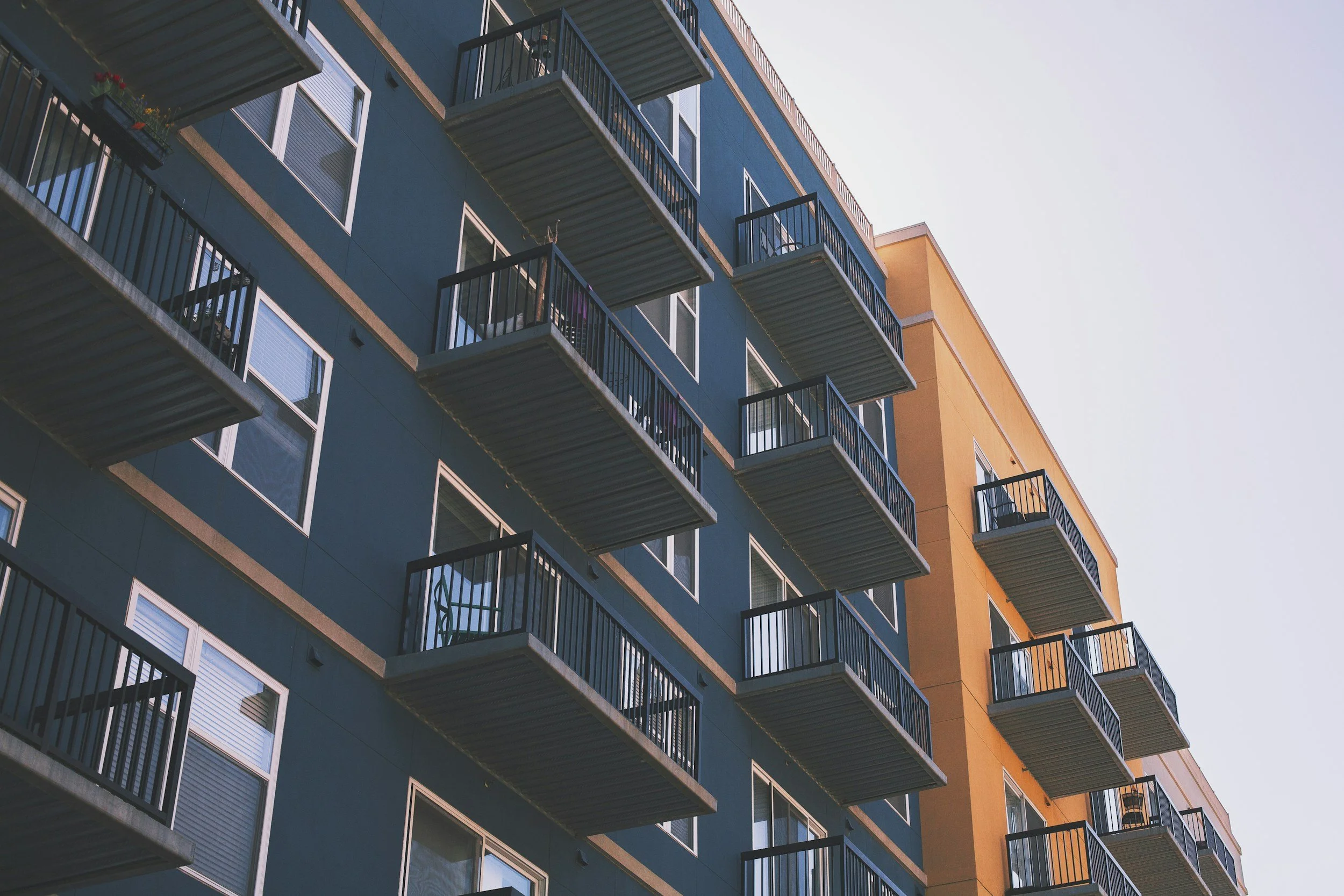
Increasing Affordable Housing
Add a bold, visionary statement that captures the essence of this vision and makes people excited to vote for you.
Columbia Heights must remain a place where the families who made it worth moving to can still afford to stay. Growth and preservation are not opposites — but they only coexist on purpose, and only when somebody insists on both at the same table. I intend to be that person for this district.





The problem
Start with who lives here. Roughly 63 percent of occupied housing units in Columbia Heights are rented, not owned. Median asking rent in the neighborhood ran about $2,360 a month as of May 2026. A household paying that at the standard affordability threshold of 30 percent of income would need to earn roughly $94,000 a year. That is the arithmetic of displacement, and it does not require a villain to work.
Now layer on what the District did in 2025. The RENTAL Act — Rebalancing Expectations for Neighbors, Tenants, and Landlords — passed the Council with ten votes in favor and became the most significant rollback of tenant rights in a generation. It landed hardest on neighborhoods that are majority-renter. That is us.
Its central change was to the Tenant Opportunity to Purchase Act, the 1980 law giving renters the first right of refusal when their building is sold. TOPA has never been primarily about tenants buying buildings; it is a bargaining right. It is how a tenant association gets repairs, a rent-increase cap, or a relocation package from an incoming owner. Over four decades, it created or preserved more than 16,000 affordable units in this city, according to the Coalition for Nonprofit Housing and Economic Development.
The RENTAL Act exempted buildings that received a permanent certificate of occupancy in the previous fifteen years from TOPA — a change affecting roughly 81,000 existing units by the DC Fiscal Policy Institute's count, and an unknown number going forward. A late-stage amendment stripped TOPA rights from most two- to four-unit buildings, which is precisely the housing stock lining our side streets. And then it left the critical term undefined.
Here is where it becomes a Columbia Heights problem specifically. The Department of Buildings issues new permanent certificates of occupancy for substantial renovations, not only for new construction. Over roughly the last two and a half years, DOB issued 5,798 permanent certificates — nearly 80 percent of them for modifications to existing structures, and only 986 for actual new construction. If a fresh certificate is treated as proof of "new construction," then a 1920s building gut-renovated in 2015 can be marketed as TOPA-exempt. That is not hypothetical. Reporting in 2026 documented a sixty-year-old property advertised as fully TOPA-exempt new construction, and a landlord lobbying group hosting a webinar at which the District administrator overseeing TOPA suggested gut renovations could qualify. That official was later placed on leave amid conflict-of-interest allegations.
The agency responsible says it applies the statute as written and does not independently verify certificates of occupancy beyond a facial review; it has been reviewing a set of exemption claims on that basis. The Council's housing leadership says this plainly contradicts legislative intent — the exemption was meant for genuinely new buildings and office conversions, not renovations. The Office of the Tenant Advocate calls the legislative intent unambiguous. Law firms advising landlords have told clients that full formal guidance could take up to two years.
Translate that into a Tuesday in Columbia Heights. A tenant association in an older building that was renovated a decade ago receives a letter asserting the building is exempt, on a legal theory the Council says is wrong and the agency will not verify. The tenants can challenge it — and the burden, the deadline, and the legal complexity are entirely theirs. Most will not. That is how a right disappears without anyone voting to repeal it.
And a caveat I will not skip, because a platform that tells only one side is not worth reading: the District genuinely is not building enough housing, and that is also driving up rents. Both things are true. What is not true is that gutting a bargaining right delivered the promised investment — real estate professionals interviewed a year after passage described the law as having failed to move the market one way or the other, while creating exactly the legal uncertainty investors dislike. We took the tenant protection and did not get the housing.
“Two out of every three of my neighbors rent their homes, and the District just made it easier to take away the one law that gave them a seat at the table. I am not going to let a letter with a bad legal theory in it decide who gets to stay in Columbia Heights. Every tenant in this district will know their rights, in their own language, before that notice arrives — and I will fight just as hard for the new housing we badly need. Anyone who tells you that you must choose between protecting the neighbor you have and welcoming the neighbor you don't have yet is not doing the harder work of doing both.”
Our solution
1. A TOPA Defense Desk in 1A06. A standing referral pipeline to the Office of the Tenant Advocate, the Legal Aid DC Housing Law Unit, and the Latino Economic Development Center; a plain-language one-pager in English, Spanish, and Amharic titled exactly what it needs to be titled — "You received a TOPA exemption notice. Here is what to do in the next 30 days" — and a personal commitment to walk any tenant association in this district through those first thirty days. The rights are worthless if the deadline passes before anyone explains them.
2. Demand real rulemaking, not interpretation by webinar. A Commission resolution urging DHCD to promulgate formal rules defining "new construction" as actual new construction — expressly excluding gut renovation and substantial rehabilitation — and to independently verify permanent certificates of occupancy before accepting any exemption claim. Paired with a request that DHCD publish a running public log of exemption claims and dispositions by address. An agency that will not verify should at least be required to show its work.
3. Build an address-by-address rights inventory for this district. Working with tenant associations, map which buildings in 1A06 are being claimed as TOPA-exempt and on what stated basis, and publish it. Sunlight is the cheapest enforcement mechanism an ANC has, and a landlord considering an aggressive exemption claim should know it will appear in a public document with a street address attached.
4. Preserve what already exists, because it is cheaper than replacing it. Prioritize rent-controlled and naturally occurring affordable housing; support District Opportunity to Purchase Act deployment and Housing Preservation Fund activity in Ward 1; and press DOB and DLCP on housing code enforcement so that deferred maintenance cannot function as a displacement strategy and renovation cannot function as an escape hatch from tenant rights.
5. Build — near transit, with real affordability, and with family-sized units. Support housing production along the 14th and 11th Street corridors and on genuinely underused sites, including surface parking and single-story commercial. But support it with terms: inclusionary set-asides reaching 30 to 50 percent of median family income rather than defaulting to 80 percent, a meaningful share of three-bedroom-and-larger units so families are not zoned out of the neighborhood, and no net loss of existing affordable units. Use the Comprehensive Plan rewrite to correct future land use designations that block transit-adjacent housing.
6. A vacant and blighted property offensive. Enforce Class 3 and Class 4 vacant and blighted tax rates; publish a Commission vacancy list; and press for receivership where an owner is sitting on a deteriorating building that draws illegal activity. Vacant buildings are simultaneously a housing loss, a public safety hazard, and a subsidy to speculation.
7. Housing stability upstream of homelessness. Defend Emergency Rental Assistance Program funding in every budget cycle; support permanent supportive housing sited with genuine community operating agreements rather than imposed and then defended; and coordinate directly with the outreach teams working the plaza and the Metro entrance so that our response to encampments is housing-first and case-managed, not simply cyclical clearance that relocates a person two blocks and calls it progress.
8. Publish the price of the Commission's "great weight" on land use. Written, public criteria for what earns Commission support on zoning relief: affordability depth and duration, unit mix, first-source local hiring, construction-period mitigation for neighbors, and enforceable commitments rather than letters of intent. Developers should know the standard before they design, and residents should be able to check whether I applied it consistently — including to projects I like.