

Addressing the Behavioral Health Crisis
Add a bold, visionary statement that captures the essence of this vision and makes people excited to vote for you.
An Advisory Neighborhood Commission has no veto power and, as a creature of statute, its authority can often seem limiting. Our real currency is our credibility — and credibility is built on good governance and on ensuring decisions are made deliberately, with supporting records. So, neighbors should not only be able to trust me; they should be able to audit me - and their entire government.





The Problem
Anthony has long opposed the siting of the stabilization and sobering center at 1338 Park Road NW - the location is incompatible with its largely residential surroundings. That opposition is sincere, and he believes it is correct on process — this neighborhood was told, not asked, and the community was not part of the decision-making process (this was before Anthony took office in 2023). I have long called out the issue of the behavioral health crisis unfolding across Columbia Heights, and I have shown up time and time again to help address it.
So here is the citywide reality I am arguing inside of. The 2026 Point-in-Time Count, taken on February 4, found 5,363 people experiencing homelessness in the District on a single night — a 4.4 percent increase over 2025 — including 1,574 people in 533 families and 3,789 unaccompanied individuals. Family homelessness rose sharply. Roughly 87 percent of those counted were in shelter or transitional housing that night, which means the visible street population is a small fraction of the actual crisis, and the invisible majority is the part that responds to housing.
Set that against the fiscal picture in Section Three: a $1.1 billion Fiscal Year 2027 gap closed substantially through program reductions, with more federal revenue contraction ahead. Homeless services, behavioral health, and permanent supportive housing are precisely the line items that get trimmed in a contraction, and precisely the ones where trimming produces the most visible street-level consequences eighteen months later. We are on the front edge of that.
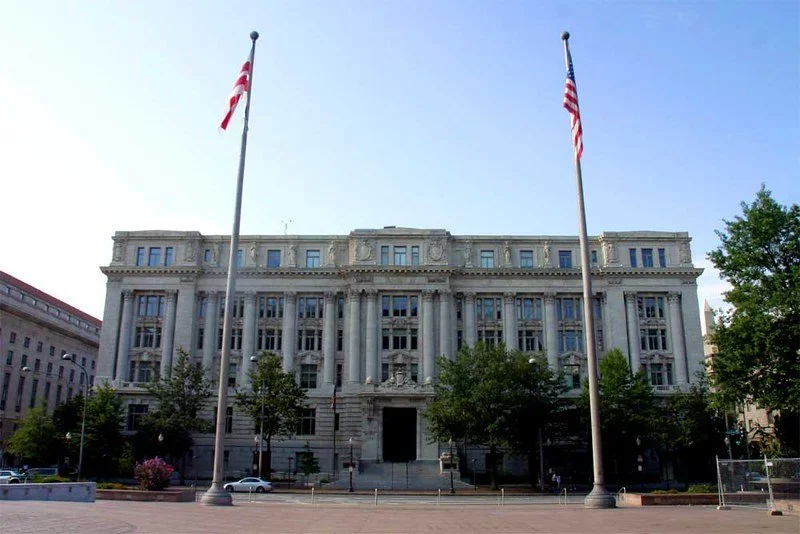
And locally, the honest description of the situation is this. The Civic Plaza and the Metro entrance are where the District's behavioral health and housing failures become visible in my single-member district. Residents experience it as a public space problem. Business owners experience it as a customer problem. The people actually living it experience it as untreated illness, addiction, and the absence of anywhere to be. All three of those are true simultaneously, and the neighborhood conversation almost always collapses into whichever one the speaker is closest to.
The cycle we currently run is expensive and accomplishes nothing: complaint, clearance, relocation two blocks, return, complaint. It consumes police time, DPW time, and outreach worker time; it destroys people's documents and medication; and it produces no housing placements. Nobody designed it. It is simply what happens when no one is accountable for the outcome, only for the complaint.
I also want to be candid about the politics, because this is where good commissioners get lazy. It is always easier to oppose a facility than to propose one. Opposition costs nothing and generates applause at a meeting. But every service this city needs has to go somewhere, and a neighborhood that only ever says no is asking another neighborhood — usually a poorer, Blacker one east of the river — to absorb what it will not. I am not willing to build a platform on that.
“‘Great weight" is not a magic phrase — it is an obligation that means nothing unless somebody checks. So I will publish every resolution, every vote, every agency response, and every single time an agency did not bother to answer at all, because silence is a finding too. I will publish my rationale even when I lose the vote. My neighbors did not elect me to be trusted; they elected me to be checked. The most radical thing a small office can do in this city is keep an honest, public record — and then live inside it.”
Our solution
1. Publish everything, on a fixed schedule. Every resolution, letter, and vote posted within seven days, with the roll call and my written rationale attached — including, and especially, when I am in the minority. A commissioner who only explains the votes he wins is not being transparent; he is doing public relations.
2. An Agency Response Ledger. A public, running record of every request this office sends to a District agency: date sent, agency, subject, response received or not, days elapsed, and outcome. Non-response gets logged as non-response. This is the single most useful thing I can build, because it converts the District's most reliable tactic — outlasting the constituent — into a published statistic.
3. Financial hygiene as a standard, not an aspiration. On-time quarterly reports, a single checking account, documented grant expenditures, and published Commission financials — measured explicitly against the specific findings in the Auditor's ANC review, and reported to residents whether we pass or fail. I would rather publish a failure than have someone else discover it.
4. Language access that is real rather than nominal. Agendas, notices, resolutions, and constituent service intake in English, Spanish, and Amharic; interpretation available at meetings on request; and a Commission-initiated Language Access Act compliance review of the agencies serving this neighborhood. In a district where a licensing process failed partly because it assumed everyone had an email address and read English, this is not a courtesy. It is the difference between a government that exists and one that functions.
5. Meetings people can actually attend and follow. Reliable hybrid participation, agendas published at least a week in advance, consent agendas for uncontested matters so contested ones get genuine debate, written testimony accepted and entered into the record, and public comment scheduled early rather than at 9:45 at night after everyone with a child has gone home.
6. Grants with sunlight on them. Published criteria, published applications, and published outcome reports for every Commission grant dollar spent in this district. Small sums, high symbolic value — this is where public trust is either earned or quietly spent.
7. Even-handed oversight of District-funded organizations. Any community-based organization receiving District dollars to serve ANC 1A appears annually with a service map, contact volume, staffing, and outcome data. Applied evenly — to violence interruption providers, business improvement and Main Street organizations, and service nonprofits alike, including the ones whose work I admire and the ones who endorse me.
8. Committees that produce documents, not just minutes. Continue the model built in the Permanent Special Committee on Public Life and Neighborhood Planning: public hearings with real testimony, and adopted reports with numbered recommendations — as with the September 2024 Civic Plaza hearing and ANC 1A Report 2024-0008. A report with page numbers can be cited in a budget hearing three years later. A meeting cannot.
9. Defend Home Rule, because it is inside the job description. Support D.C. statehood and oppose federal interference with our locally elected government — including Section 740 federalization of the Metropolitan Police Department and the deployment of federalized troops that a federal court found unlawful. The ANC is the smallest unit of self-government in the United States. A commissioner who will not defend self-government has misunderstood the office.
10. Grade myself in public. Publish a first-hundred-days list, then a written self-assessment at the midpoint and at the end of the term, measured against the metrics printed in this document. Not a newsletter of accomplishments — a scorecard including what I failed to deliver and why.