

Planning for Columbia Heights
The Heart of the District, By Design
As Chair of ANC 1A's Permanent Special Committee on Public Life and Neighborhood Planning (“PSCPL”), Anthony is ensuring Columbia Heights helps shape DC's next Comprehensive Plan — and doing so together, just like we always have, to shape our neighborhood and its communities.
Columbia Heights is already one of the most vibrant and alive places in DC. It is a Metro hub, a shopping destination, and home to neighbors who have been here for generations. Over the next 25 years, Columbia Heights will change. The real question is whether that change is planned with the people who live here or simply happens to them. Anthony's vision is a Columbia Heights where growth and quality of life move in the same direction. That means new homes where they fit best, and streets and plazas that invite people to stay instead of hurry through. It means public spaces cared for as they matter, and a neighborhood where the people who live here today can afford to stay tomorrow, while ensuring we can welcome anyone who wants to call Columbia Heights home.
Getting there takes planning: the long-range, often unglamorous work of deciding where housing, jobs, parks, and public investment go. Right now, the District is rewriting that plan for the first time in nearly 20 years. Anthony wants to ensure that every resident has the loudest, clearest, best-prepared voice in the room. Because everyone deserves a seat at the table when we plan the future of our great neighborhood.
The Problem
Every block tells the story of a plan. The height of a new building, the width of a sidewalk, where a bus lane runs, whether a plaza gets shade trees — nearly all of it traces back to DC's Comprehensive Plan (Comp Plan) or a similar study or framework plan, such as the Columbia Heights-Mount Pleasant Vision Framework for Public Realm Design (known at the “Public Life Study”). The Comp Plan guides where the District puts housing and jobs and how it invests in transportation, parks, and utilities. Zoning decisions have to be consistent with it, and it shapes where capital improvement dollars go.
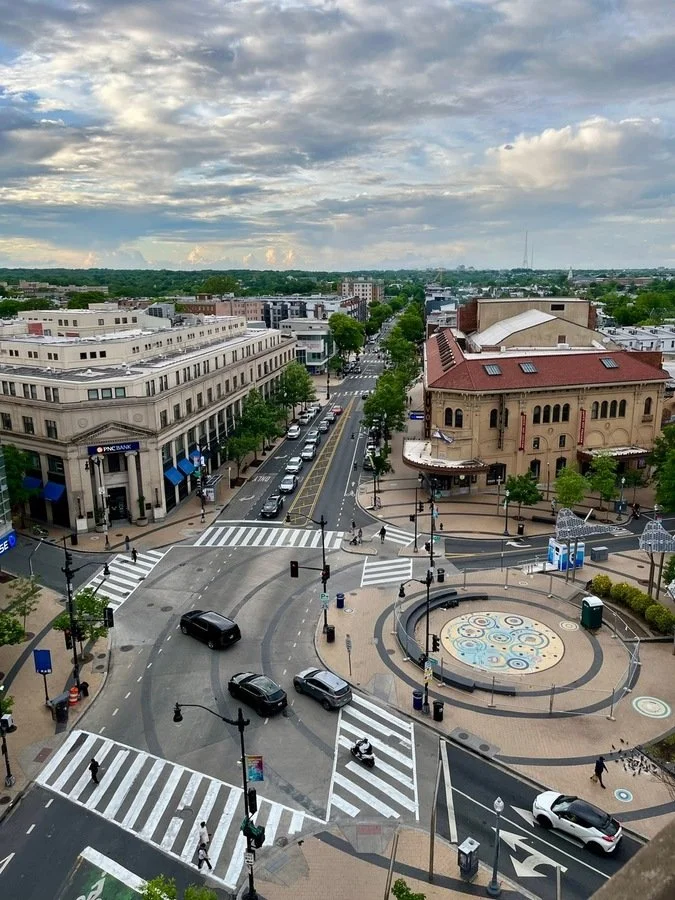
Columbia Heights has grown exponentially in the last 20 years. The last full rewrite of the Comp Plan happened in 2006 (with a substantial update in 2021). Since 2006, the neighborhood has added new apartment buildings, new businesses, and new neighbors, and the way people live, shop, and move through it has changed with them. The Office of Planning's recent Public Life Study found that while huge numbers of people move through Columbia Heights, most are passing through rather than spending time here. Residents pointed to street design, heavy traffic, and a lack of shade and seating as the reasons.
Plans only work if they are funded, maintained, and shaped early. Too many good studies end up on a shelf. When planning falls short, you feel it at the block level. And when neighbors are not brought in at the start, growth shows up later as one contentious zoning case after another instead of a shared direction everyone understands. Anthony is committed, as chair of the ANC’s planning committee, to ensuring every neighbor can see themselves in the future of Columbia Heights, and that starts with charting a course for progress, together.
The Permanent Special Committee on Public Life and Neighborhood Planning (“PSCPL”) is ANC 1A's home for long-range planning, community development, public space review, and the upkeep of the neighborhood's shared places. Anthony chairs it with one goal: a Columbia Heights where residents can live, thrive, and raise a family, where visitors want to come and enjoy everything we have to offer, and where small businesses can grow and shape our local economy and the District’s.
Under his leadership, SCPL convened the 2024 public hearing on the Columbia Heights Civic Plaza, and the full Commission unanimously adopted its report and recommendations. The committee partnered with neighbors through the Office of Planning's Public Life Study and provided comments at every stage of the process. The committee also produced the neighborhood's cleanup and beautification plan, creating a framework for long-term volunteer efforts. As chair of this committee for the last three years, Anthony has exercised significant oversight of government agencies, such as the Department of Parks and Recreation (DPR), the Department of General Services (DGS), and the Department of Public Works (DPW), to ensure Columbia Heights’ public realm, parks, and public spaces receive the necessary maintenance and capital improvements they deserve.
Anthony’s Record
-
As Commissioner, Anthony established and chairs ANC 1A's Permanent Special Committee on Public Life and Neighborhood Planning (SCPL) — the first standing body in our Commission dedicated to how residents and visitors experience the public realm, with the Civic Plaza at the center of its mandate, as well as our parks and community facilities.
-
Anthony brought residents, community stakeholders, and District government officials to the table — in person and virtually — to put the Plaza's challenges and opportunities on the public record at the first-ever public hearing of ANC 1A (and all ANCs according to the Office of Advisory Neighborhood Commissions). Following the hearing, the Commission unanimously adopted the official Hearing Record and committee report (ANC 1A Report 2024-0008), containing formal recommendations for action by the Office of Planning, the Department of Parks and Recreation, the Department of General Services, and the Department of Public Works.
-
Under Anthony’s leadership, the Permanent Special Committee on Public Life and Neighborhood Planning coordinated community engagement for the Office of Planning's data-driven study of our public spaces — helping drive participation in surveys, street interviews, and community "walkshops" — and now leads ongoing oversight of the study's implementation. The final report, the Columbia Heights and Mount Pleasant Vision Framework for Public Realm Design, now provides our neighborhood with a shared blueprint for Civic Plaza, the corridors around it, and much more.
-
Anthony introduced a resolution (R25-0042) to establish “The Heights of Possibility,” a Columbia Heights Neighborhood Improvement Program, under the coordination and direction of ANC 1A. Though the Commission chose not to approve the measure, Anthony has used it as a continual rallying call for much-needed Commission-led leadership on how best to improve the material conditions of parks and public spaces, such as Civic Plaza, in our neighborhood.
-
Through his committee, Anthony drafted and shepherded a comprehensive cleanup and beautification plan for Columbia Heights to passage, grounded in agency accountability and in how best to create a public record of service-delivery failures associated with conditions across our public realm. The plan creates a designated zone for the Columbia Heights Civic Plaza, so volunteers, agency partners, and other stakeholders can better focus the necessary attention and resources in this space.
DC 2050: A Once-in-a-Generation Rewrite
The next nine months decide what the plan says about Columbia Heights. DC 2050 is the District's first full rewrite of the Comprehensive Plan in nearly two decades, and it will guide growth for the next 25 years. The Office of Planning is now drafting the plan, and from October 2026 through June 2027 it will collect public input and refine the draft before the Mayor sends it to the Council.
Place types will shape every block. Instead of relying mainly on the old land-use categories, DC 2050 describes neighborhoods by "place types" — from small-scale residential streets to neighborhood centers, urban centers, and regional centers. The place type assigned to a block will influence how tall buildings can be, what mix of homes and shops fits, and how streets and public spaces are designed.
Getting that right for Columbia Heights is the job. Our neighborhood is dense, transit-rich, and commercially vital, but it is also home to rowhouse blocks, longtime residents, and affordable homes worth protecting. A plan written from downtown could miss that balance. A plan shaped by the people who live here will not. [PAGE COPY]
The next nine months decide what the plan says about Columbia Heights. DC 2050 is the District's first full rewrite of the Comprehensive Plan in nearly two decades, and it will guide growth for the next 25 years. The Office of Planning is now drafting the plan, and from October 2026 through June 2027 it will collect public input and refine the draft before the Mayor sends it to the Council.
Place types will shape every block. Instead of relying mainly on the old land-use categories, DC 2050 describes neighborhoods by "place types" — from small-scale residential streets to neighborhood centers, urban centers, and regional centers. The place type assigned to a block will influence how tall buildings can be, what mix of homes and shops fits, and how streets and public spaces are designed.
Getting that right for Columbia Heights is the job. Our neighborhood is dense, transit-rich, and commercially vital, but it is also home to rowhouse blocks, longtime residents, and affordable homes worth protecting. A plan written from downtown could miss that balance. A plan shaped by the people who live here will not.
Our Solutions

"The Columbia Heights Civic Plaza is more than just a shared space — it's a symbol of our neighborhood's resilience and diversity, a place where history and possibility converge. The future of the Civic Plaza isn't just about enhancing physical infrastructure; it's about creating a public space that reflects the best of us and invests in the potential of every resident."
-Commissioner Anthony Thomas-Davis