

Transforming Public Life & Spaces
Add a bold, visionary statement that that captures the essence of this vision and makes people excited to vote for you.
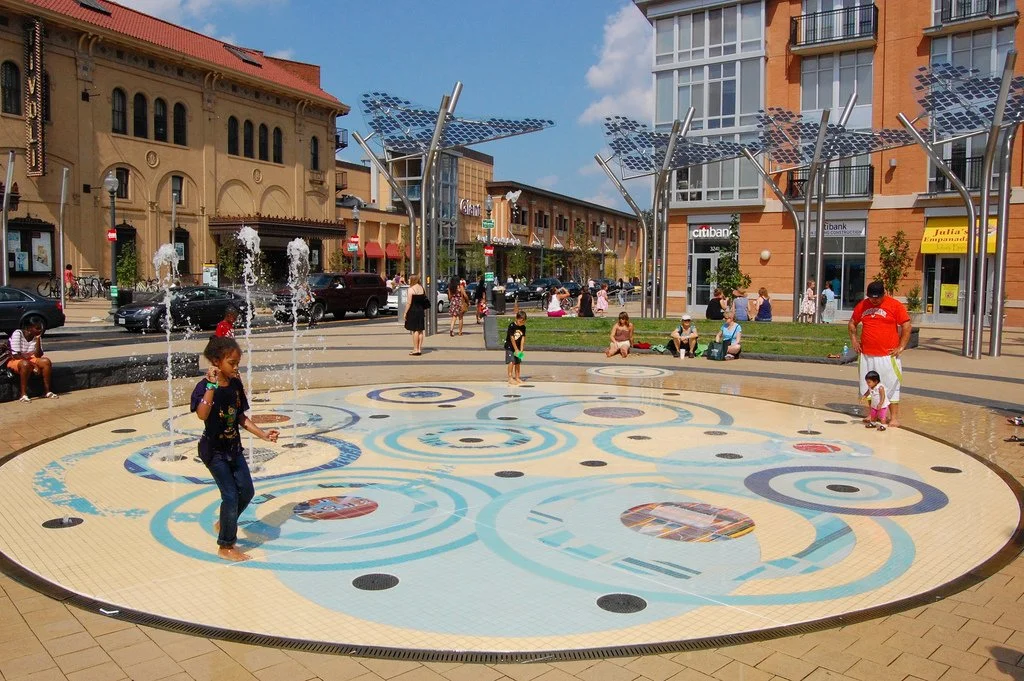
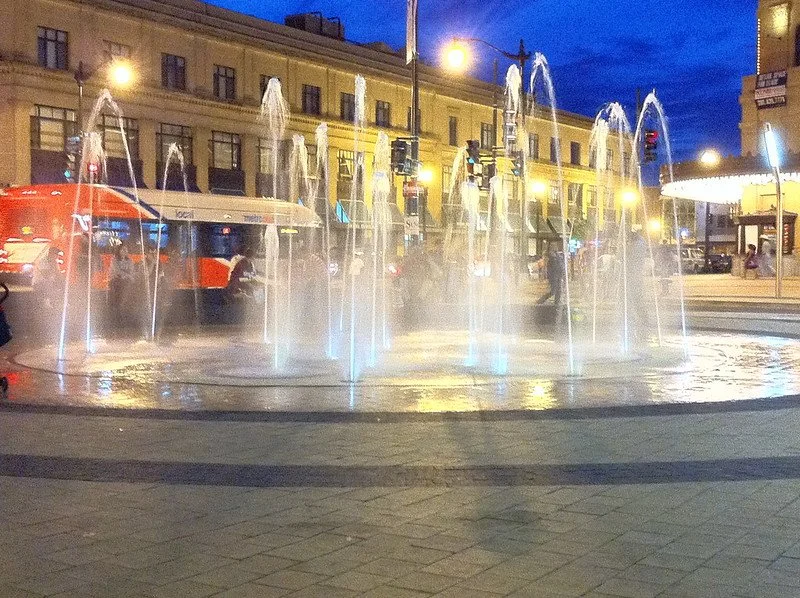
The Columbia Heights Civic Plaza should be the best public square in Washington — not the one the District apologizes for. Public space is where a neighborhood's promises to itself are either kept or broken in plain view, and ours are legible from the pavement. I intend to make them worth reading.
The problem
The Civic Plaza has been managed by improvisation for most of its life, and the neighborhood can read that as fluently as any budget document.
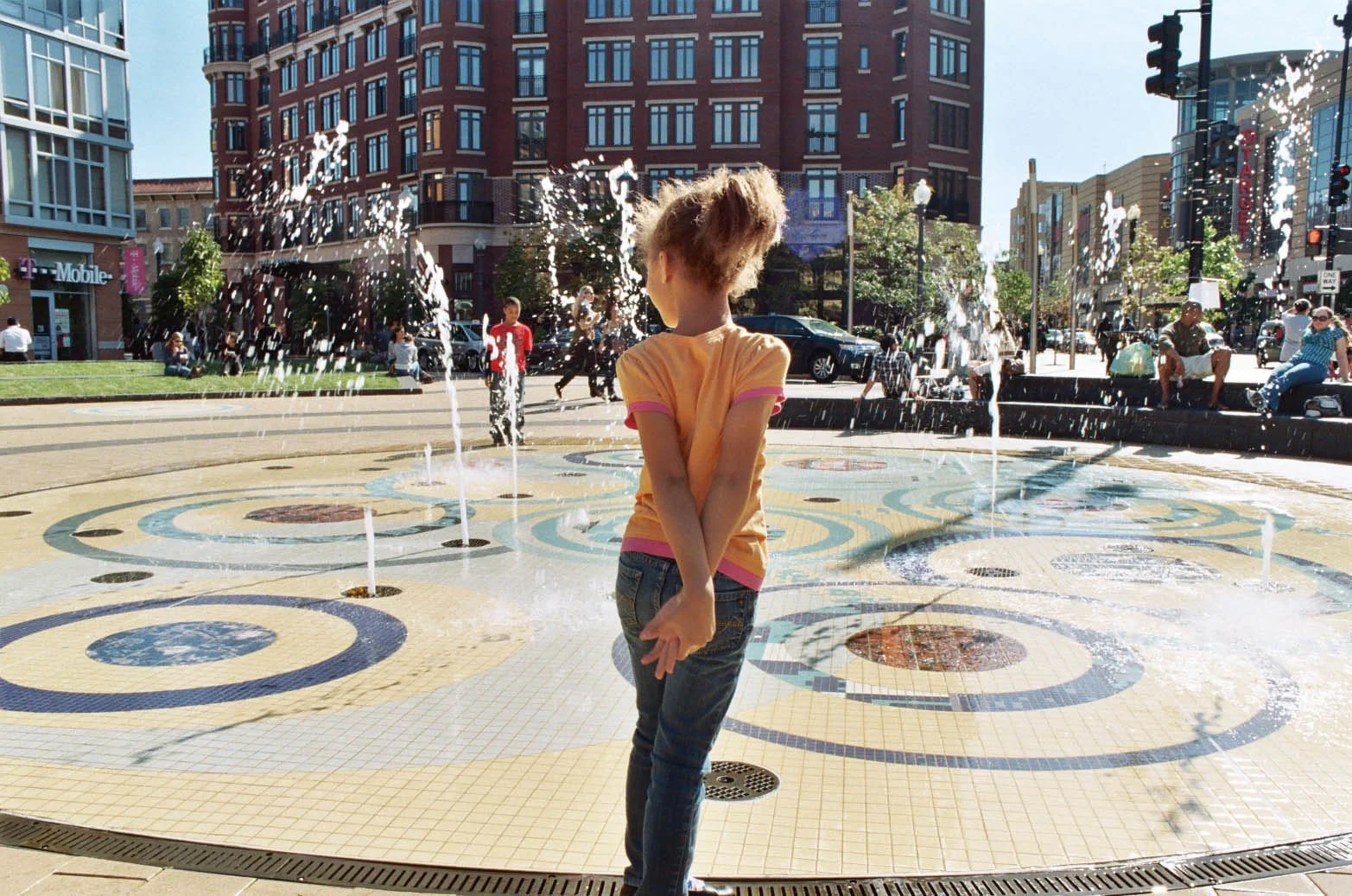
The record is a pattern of partial effort. The Fiscal Year 2024 budget devoted roughly $750,000 to repairs and maintenance of the fountain and splash pad. DGS contractors fenced the plaza in March 2025 to refurbish the fountain. District Bridges tracked down original tiles from the artist so the Resonance mosaic could be restored to its actual design rather than patched. Each of those was a real accomplishment by people who cared. And meanwhile the solar panels, the landscape terraces, the seating, the paving, the irrigation, and the lighting have all continued to accumulate deferred maintenance, because there is no standing maintenance standard and no single accountable owner.
That is the structural problem, and it is worth stating precisely: the plaza and its surroundings are divided among DGS, DPR, DPW, DDOT, WMATA, and the Office of Planning — which means every agency holds a piece and no agency holds the plaza. Fragmented ownership is not a coordination problem to be solved with better meetings. It is an accountability vacuum, and vacuums do not get filled by goodwill.
The Commission has already put this on the record. On September 5, 2024, as Chair of the Permanent Special Committee on Public Life and Neighborhood Planning, I convened a public hearing — in person and virtually — taking testimony from residents, stakeholders, and District officials on the conditions and management of the Civic Plaza. The Commission then unanimously adopted the hearing record and the Committee's report, ANC 1A Report 2024-0008, with a full set of recommendations to the Office of Planning, DGS, DPR, and DPW. That document exists, with page numbers. What it does not have yet is a capital line.
The same is true of the 2024 Columbia Heights–Mount Pleasant Public Life Study. It is a genuinely good piece of work. A study without appropriations is decoration.
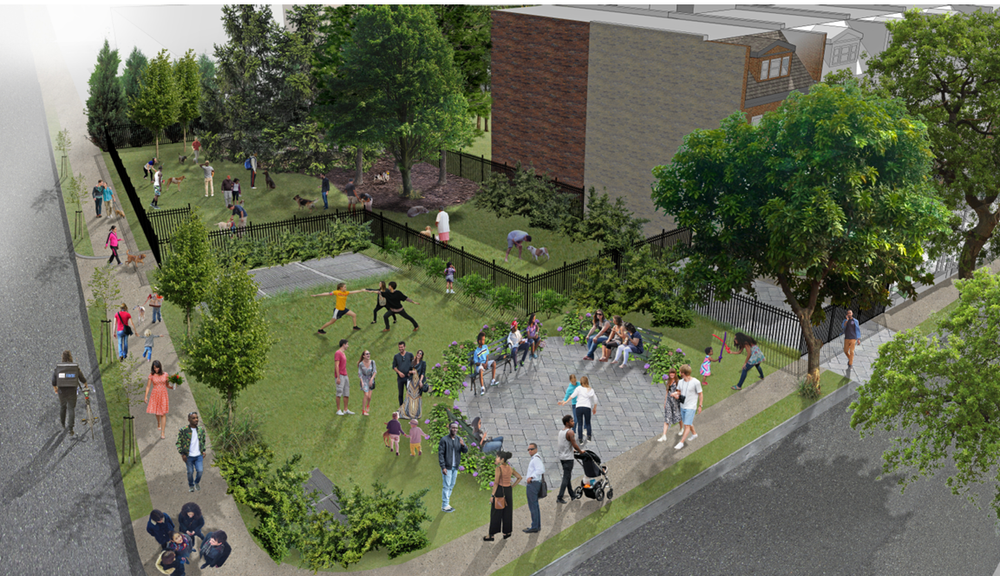
The dog park is the clearest illustration of how this fails. The land sits with WMATA. DGS and DPR have to close the loop on design and construction. Years have passed in the status of "in progress." Nothing about it is technically difficult. It is stuck because no one's performance review depends on it.
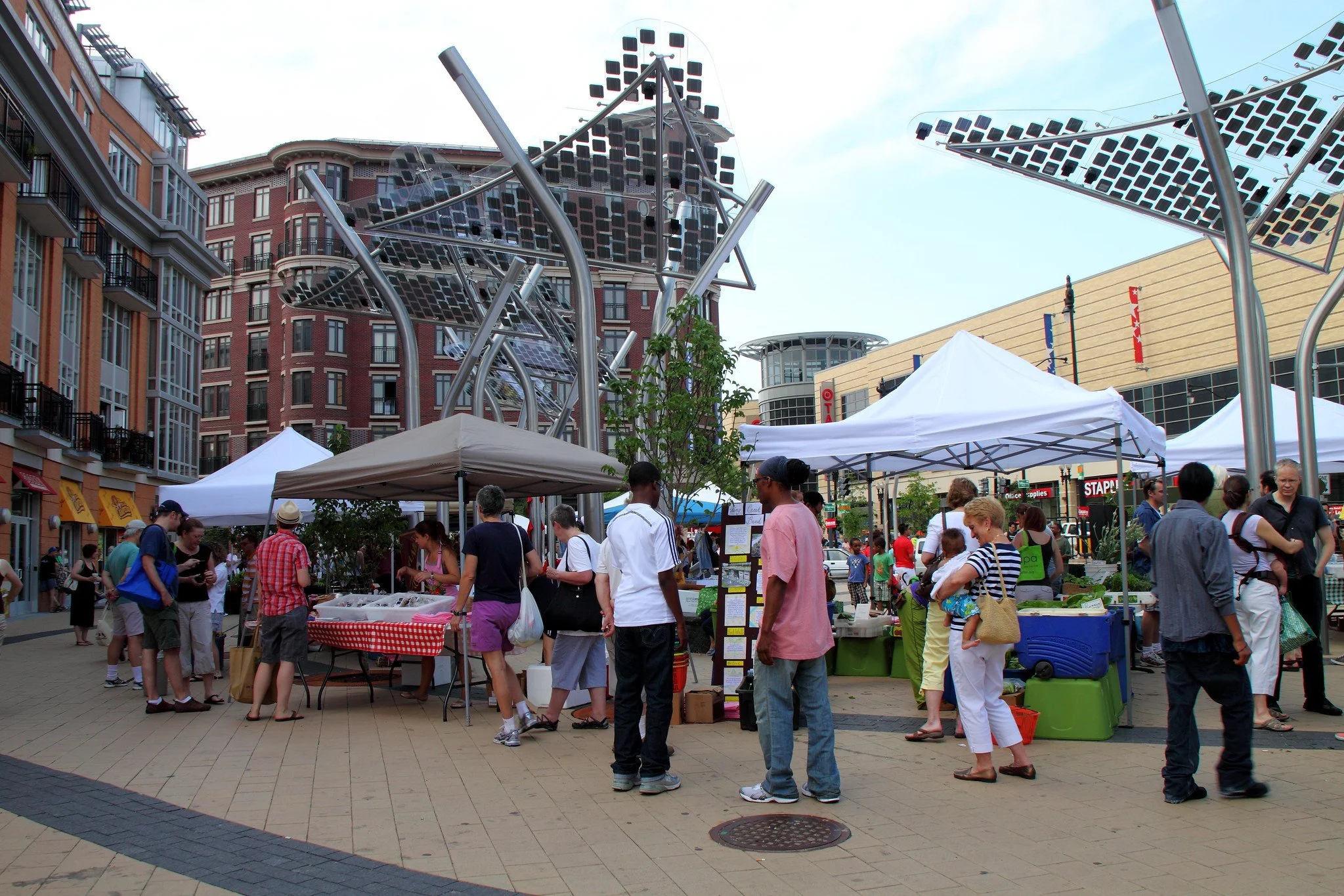
And there is a harder problem underneath the maintenance problem: our public space is genuinely contested. The plaza, the Metro entrance, the DC USA frontage, and the vending zone occupy roughly the same 400 feet, and they are claimed simultaneously by vendors, transit riders, pedestrians, buskers, programmed events, patrons, and people with nowhere else to be. There is no shared plan, no shared map, and no shared permit calendar. So the District manages the conflict with jersey barriers and signage, which is what governments do when they have no plan: they subtract uses until the friction stops. That approach produces an emptier, less safe, less economically useful square, and it is a choice, not a necessity.
One more piece of timing matters enormously. The Office of Planning is conducting the first full rewrite of the Comprehensive Plan in nearly twenty years. A draft went out for public meetings in 2026; it reaches the Council, the Zoning Commission, and Congress in 2027, with approval expected by the end of 2028. This is the one window in two decades to write Columbia Heights' public realm into binding District policy — and windows like that close whether or not the neighborhood noticed them.
“A plaza is a promise. Ours has been renovated in pieces, funded in fragments, and owned by nobody — and every resident who walks across it can read that neglect without being told. I am not asking for another study. I am not asking for another small fix. What I want now is a name on a maintenance contract, a number in the capital budget, and a date on the calendar. I want to give this neighborhood the public square it deserves — and let them see the return on that investment — in foot traffic, in increased revenues, in civic pride, in people who feel like they belong to something.”
Our solutions
1. One accountable steward for the Civic Plaza. Press for a formal, written management agreement that names a single lead agency — DGS or DPR — with a published maintenance standard, defined service frequencies, a designated plaza manager with a phone number, and a public service log. Paired with a clearly scoped co-management role for District Bridges and the Civic Plaza Partners effort. Shared responsibility without a named owner is what got us here.
2. Convert the Public Life Study into a costed five-year capital request. Take the 2024 Columbia Heights–Mount Pleasant Public Life Study recommendations and the recommendations adopted in ANC 1A Report 2024-0008, price them, sequence them, and file them into the Fiscal Year 2028 and 2029 budget cycles and into the Capital Improvements Plan — then publish which items were funded each year. Full implementation within five years is achievable if somebody is tracking it annually. Nobody currently is.
3. Finish the dog park, with a public countdown. A Commission resolution seeking a written, dated commitment from WMATA on land transfer or easement, and from DGS and DPR on design and construction start. Then publish the deadline and report against it every month. Embarrassment is a legitimate governing tool when nothing else has worked for years.
4. Write Columbia Heights into DC 2050. File formal Commission comment on the draft Comprehensive Plan seeking an explicit Columbia Heights public realm policy; protection and expansion of open space in our densest census tracts, which are among the most park-poor per capita in the ward; and anti-displacement policy language tied directly to any new density the plan assigns here. This is the highest-leverage writing an ANC will do this decade.
5. One map, one plan, one permit calendar for the contested 400 feet. Convene DLCP, DDOT, DGS, WMATA, and the Commission to produce a single public space management framework covering the plaza, the Metro entrance, the DC USA frontage, and the vending zone together — designated vending locations, programming zones, clear pedestrian paths, loading, and a shared permit calendar. Design the coexistence instead of subtracting uses until the friction stops.
6. Program the space as a form of maintenance. Recurring, funded activation — markets, music, film nights, and cultural programming that reflects the Salvadoran, Ethiopian, Dominican, West African, and Black American communities who built this neighborhood. Occupied space is safer than abandoned space, and it is cheaper to maintain. Activation is not decoration; it is a public safety and asset-preservation strategy that happens to be enjoyable.
7. Protect the neighborhood's cultural memory in its public realm. Restore and protect the Resonance mosaic; commission new public art; establish a mural program for corridor blank walls; and mark this neighborhood's civil rights, labor, and immigrant history where it happened. A neighborhood that changes as fast as ours needs its memory built into the pavement, or it loses it in a decade.
8. The parks beyond the plaza. DPR and DGS capital and maintenance asks for Girard Street Park, the small parks, triangles, and orphan parcels that no agency claims, and school-adjacent open space at Harriet Tubman Elementary and Bruce-Monroe — including formal joint-use agreements so school fields serve the neighborhood outside school hours. These are the spaces families with young children actually use every day.